A journey into the Uyghur soul

MUQAM

Many voices.
One living tradition.
Scroll to discover
01 — 33The people behind the music
01 / The instruments

Wood. String. Skin.
A world of sound.

Meet the instruments that give Muqam its voice. Bowed melodies, ringing strings and a pulse that brings everyone together.

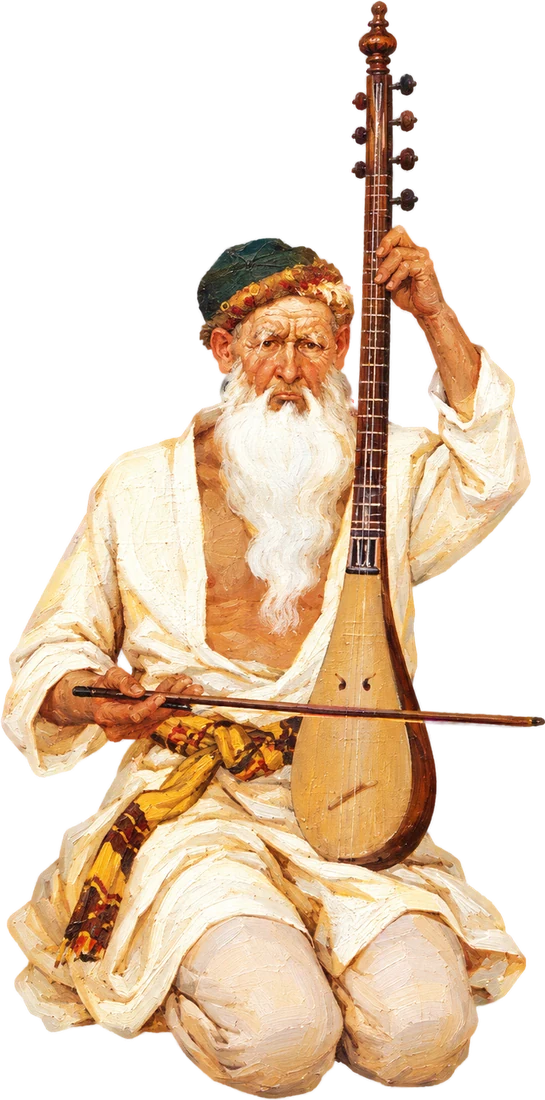
Bowed lute01Satar, played in the Uyghur Twelve MuqamSatarA long-necked bowed lute closely associated with the Twelve Muqam. A melody string sounds above sympathetic strings, and the instrument is often played by the lead singer.
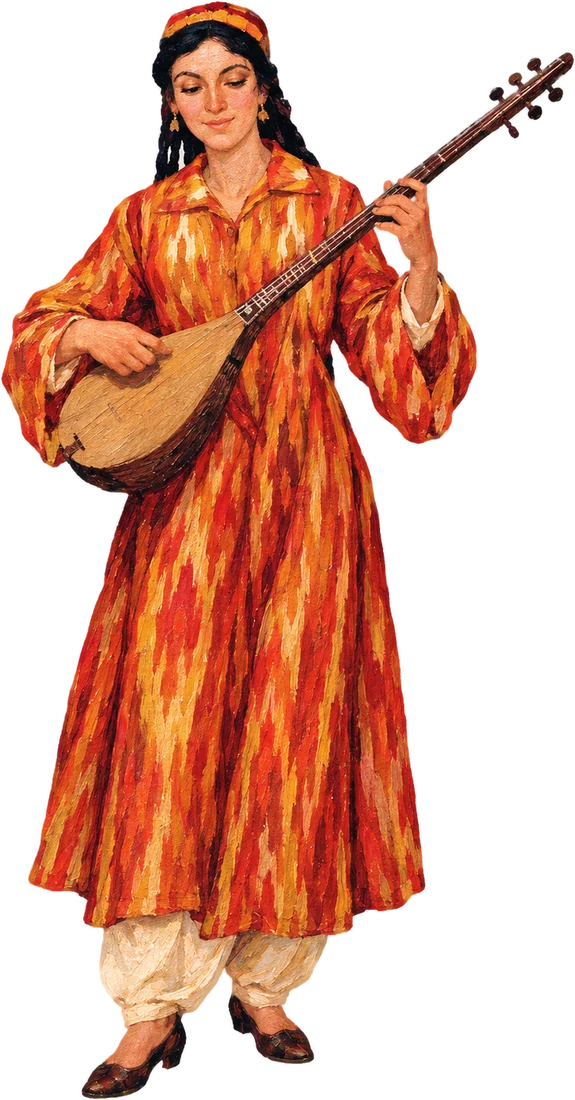
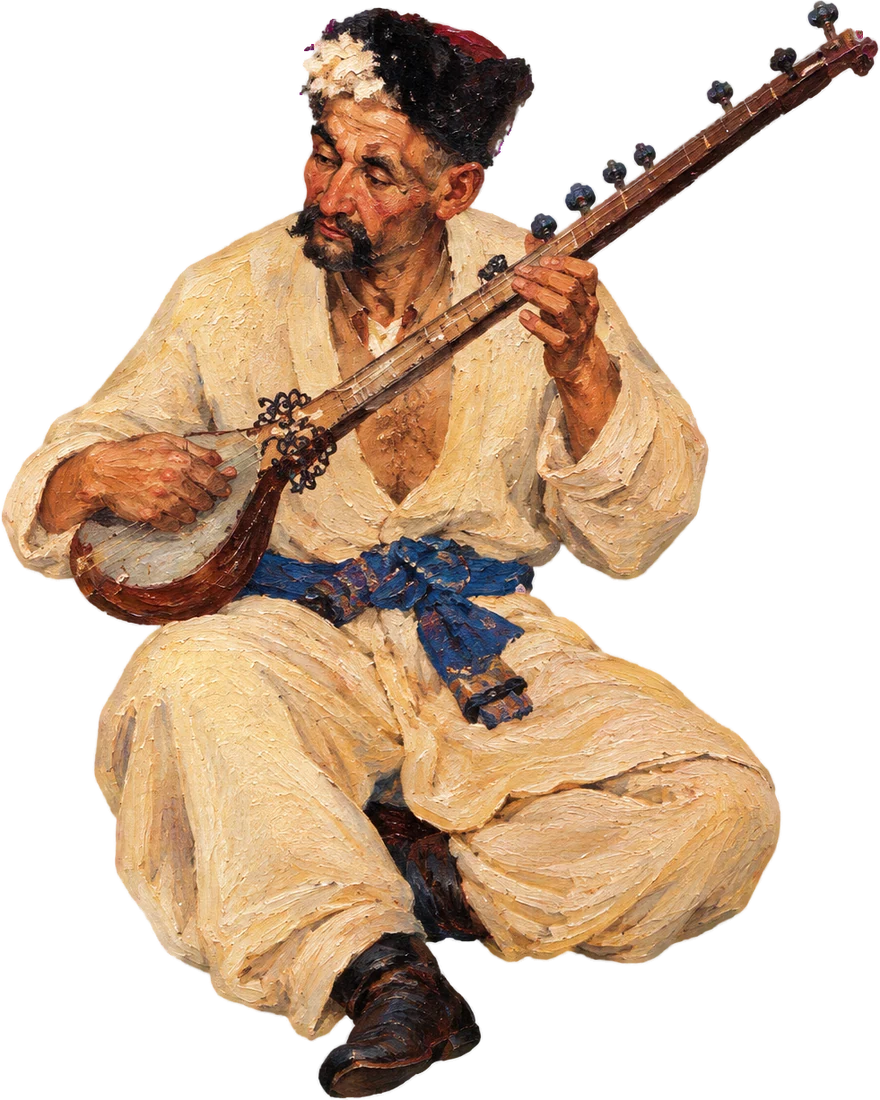
Long-necked lute02Dutar, played in the Uyghur Twelve MuqamDutarThe dutar is a long-necked, two-stringed lute, played by plucking and strumming. It accompanies singing and instrumental music. The exact type of the painted instrument remains uncertain.
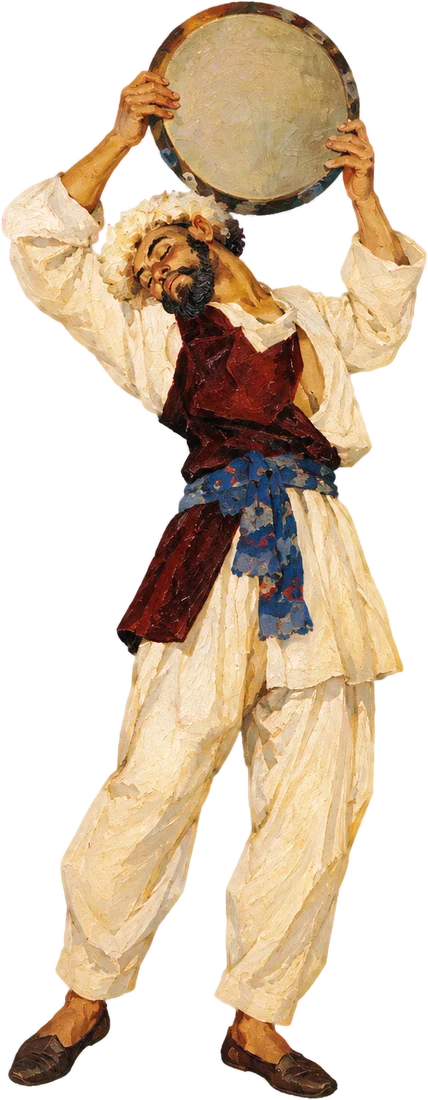
Frame drum03Dap, played in the Uyghur Twelve MuqamDapThe dap is a circular frame drum with a skin head; many examples contain metal rings. Hand strokes articulate rhythm, while smaller daps help shape the Twelve Muqam’s rhythmic cycles.
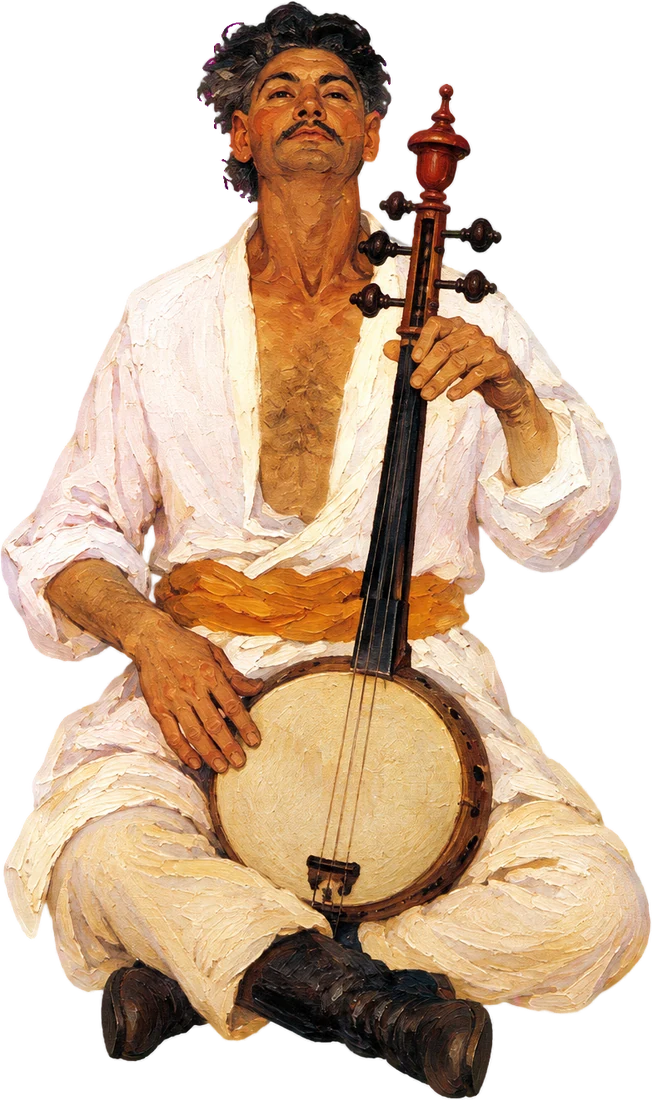
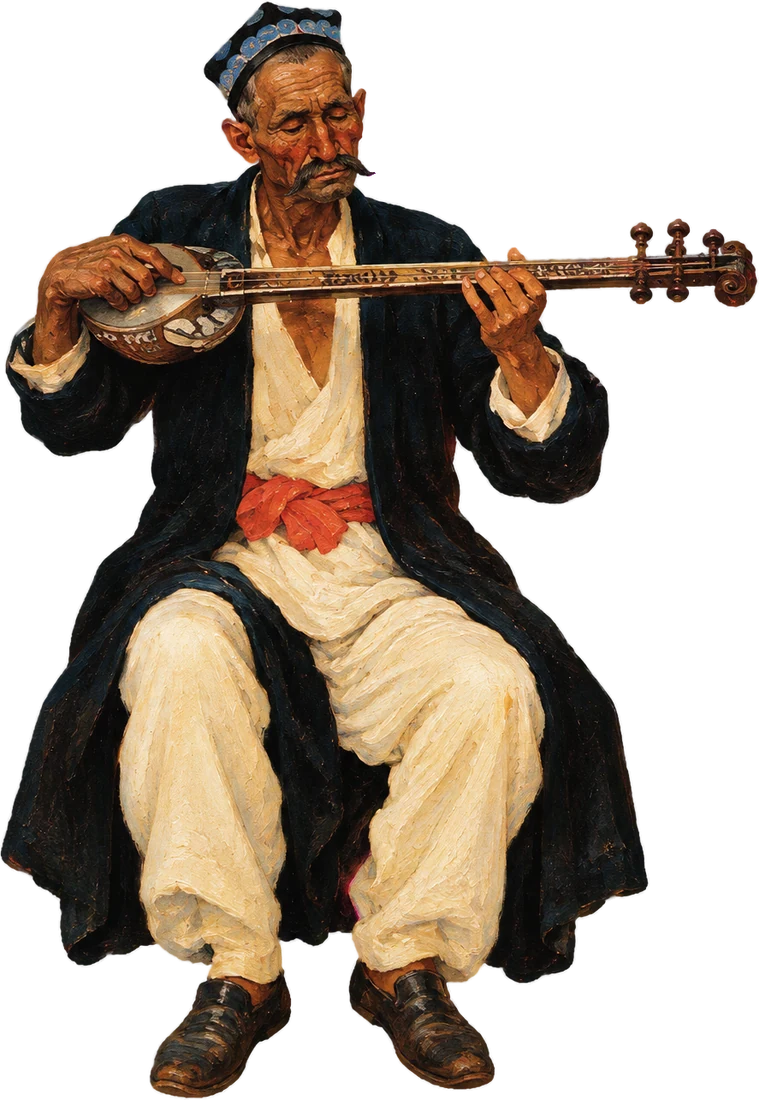
Plucked lute04Rawap, played in the Uyghur Twelve MuqamRawapPlayed with a plectrum and held near the chest, the rawap belongs to a varied family of plucked lutes. The painting suggests a rawap-type instrument.
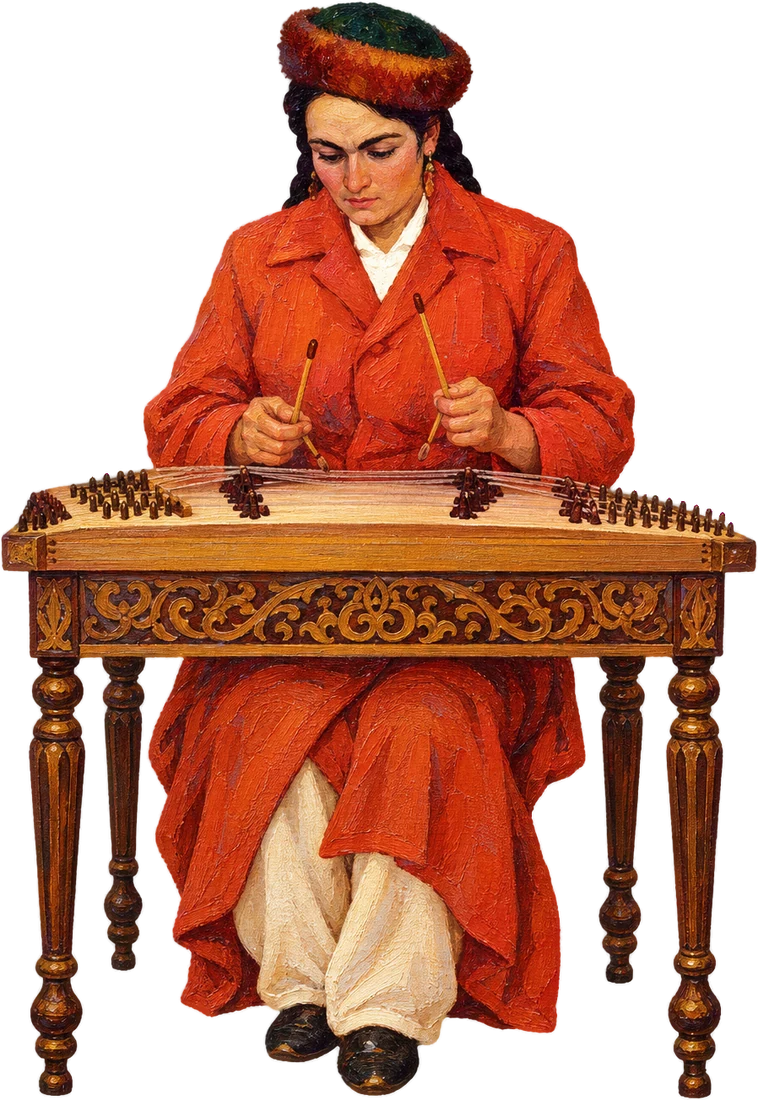
Plucked zither05Qalun, played in the Uyghur Twelve MuqamQalunA plucked zither with strings stretched across a broad wooden soundbox. The musician plays with plectrums. The low, horizontal instrument in the painting suggests this family.
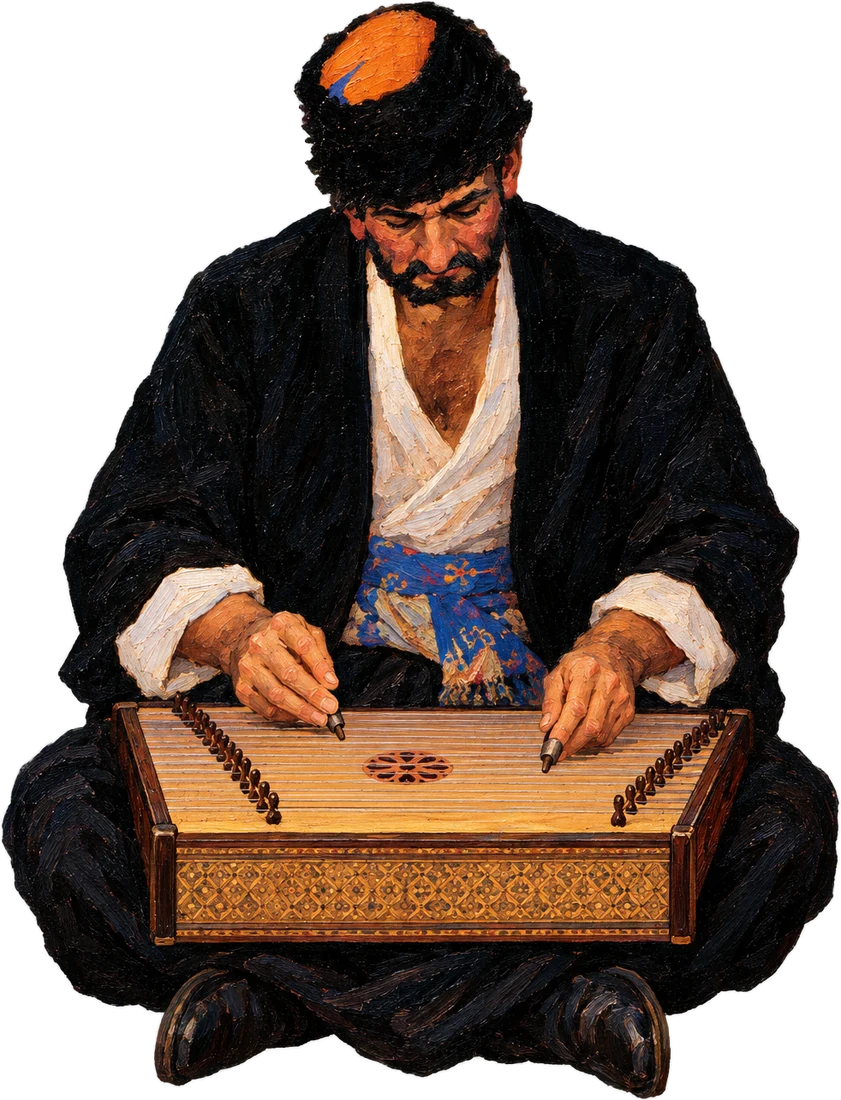
Hammered dulcimer06Chang, played in the Uyghur Twelve MuqamChangThe chang is a hammered dulcimer: its strings are struck with two slender beaters. Instruments of this type appear in Uyghur ensembles, producing a clear, ringing texture.

The instrument names are interpretations of the painting. Discover their distinctive forms and voices.

02 / The heritageA tradition, still unfolding

Carried by people.
Shared across generations.

More than a performance, Muqam is a meeting of music, poetry and dance. A living memory, passed from one voice to the next.
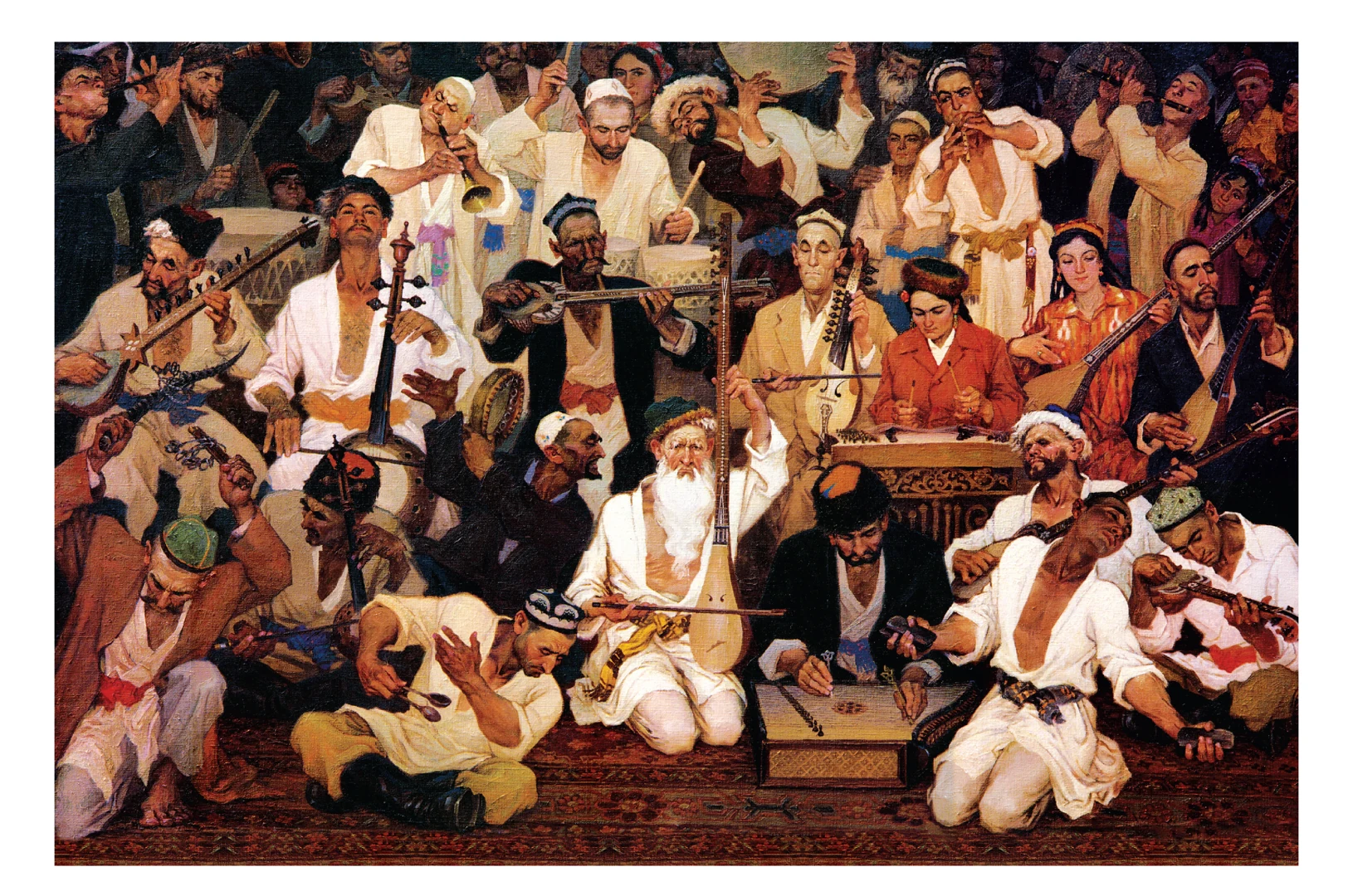
Inside the painting

Look closer. Every detail belongs to the ensemble.

The ensemble painting that inspired this journey
The ensemble painting that inspired this journey33 / MUQAM

Muqam brings together song, instrumental music, poetry, and dance in Uyghur cultural life. Its repertoire draws on folk storytelling and classical verse, performed by solo voices and ensembles. The Twelve Muqam is one of several regional traditions, alongside Dolan, Turpan, and Hami Muqam. It unfolds across twelve extended suites, each joining different musical forms. UNESCO recognizes Uyghur Muqam of Xinjiang as intangible cultural heritage. This page offers an introduction through the musicians and instruments in the painting.

Read about the tradition · UNESCO
01

Sound

Voices and instruments, in many colours.

02

Poetry

Classical verse and stories carried in song.

03

Dance

Rhythm takes shape in movement.

Three parts. One journey.

Within a Muqam

Chong NaghmaDastanMeshrep

A Twelve Muqam suite is commonly described in three broad sections: Chong Naghma, Dastan, and Meshrep. An opening in free rhythm leads into measured songs and instrumental passages, followed by narrative songs and dance songs.
03 / Amannisa KhanA voice across centuries
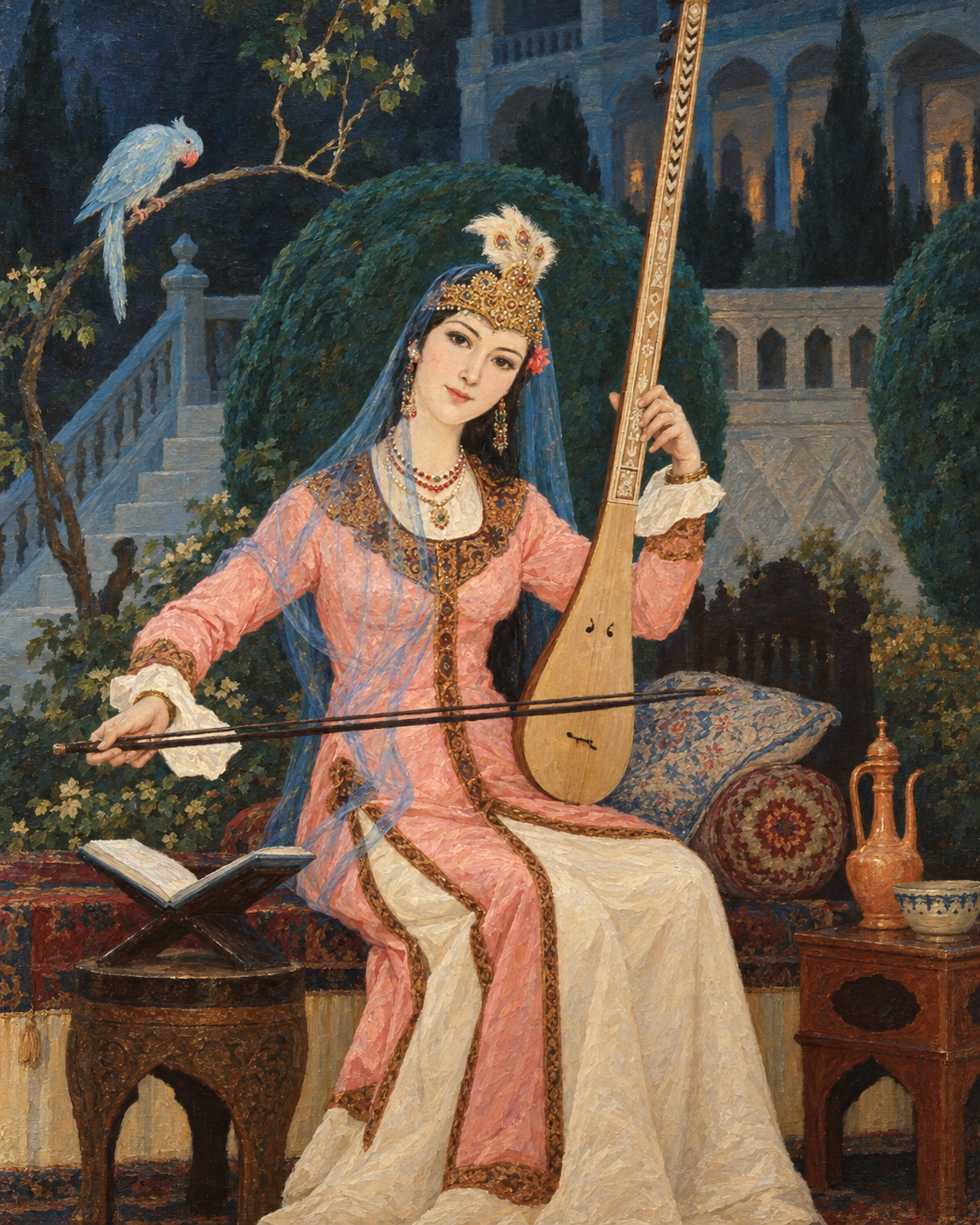
Artistic reconstruction inspired by a modern portrait
Artistic reconstruction inspired by a modern portraitPORTRAIT / 03
Poet · musician · cultural memory

She gathered
what time might lose.

c. 15261560

Amannisa Khan

Remembered as a poet and musician of sixteenth-century Yarkand, Amannisa Khan is traditionally credited with helping collect, organize and preserve the Twelve Muqam. Her story endures as a powerful symbol of Uyghur musical memory.

Her biography is preserved chiefly in Mulla Mu'jiz's nineteenth-century History of Musicians; many details belong to later cultural memory rather than contemporary documentation.

Read the historical context
04 / The TwelveNamed at last

Twelve suites.
Twelve names.

Choose a suite to bring its Uyghur name, meaning and origin into the centre of the dial.

Select a suite to bring it forward.

Transliterations vary between sources. These follow the spelling conventions used elsewhere on this page.

05 / The ensemble01 — 33

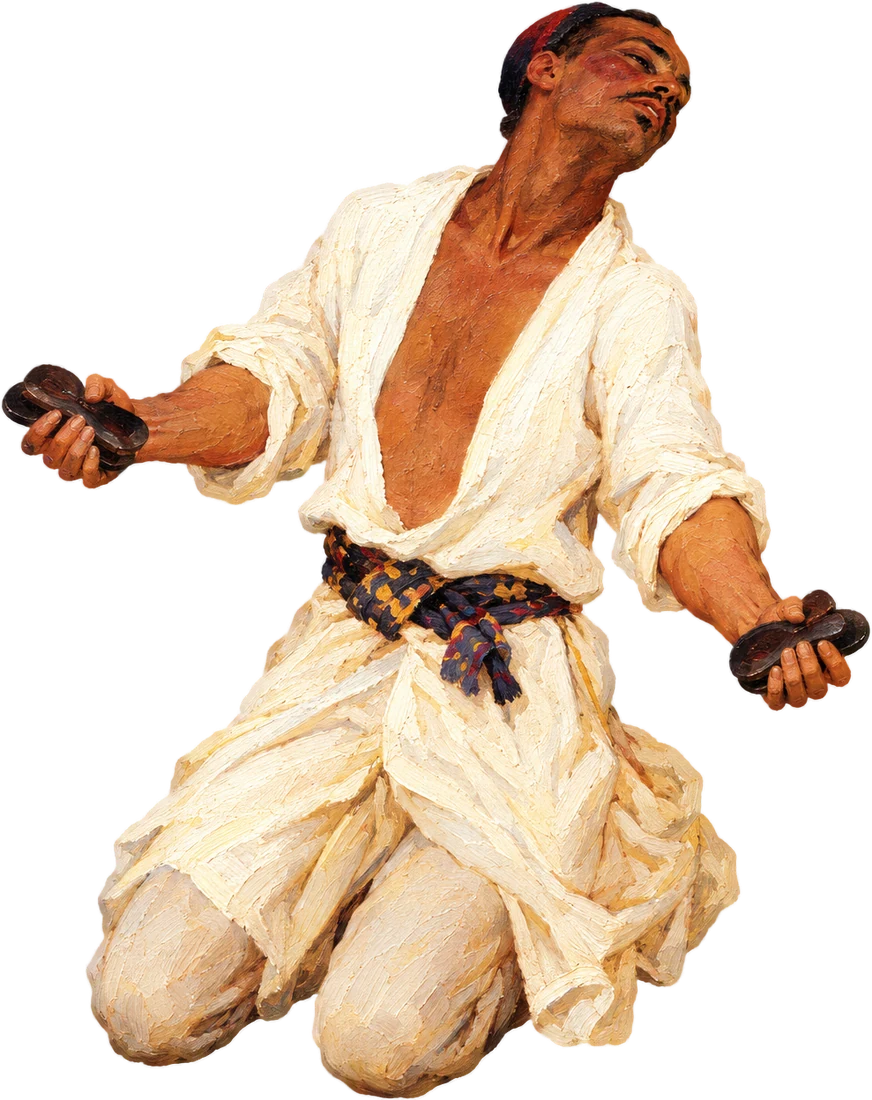
Every face,
a different story.

Thirty-three figures. One extraordinary ensemble. Discover every retained character from the painting, from the front-row musicians to the voices behind them.