Sound
Voices and instruments, in many colours.
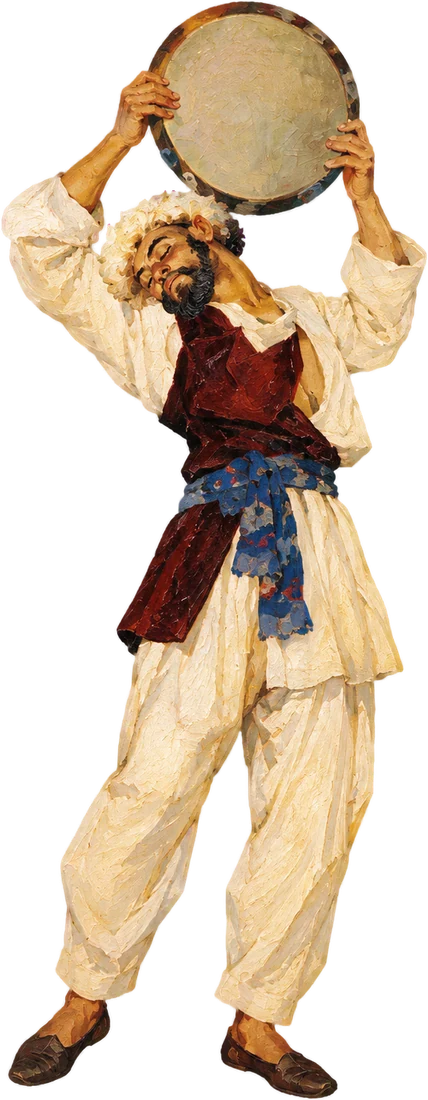
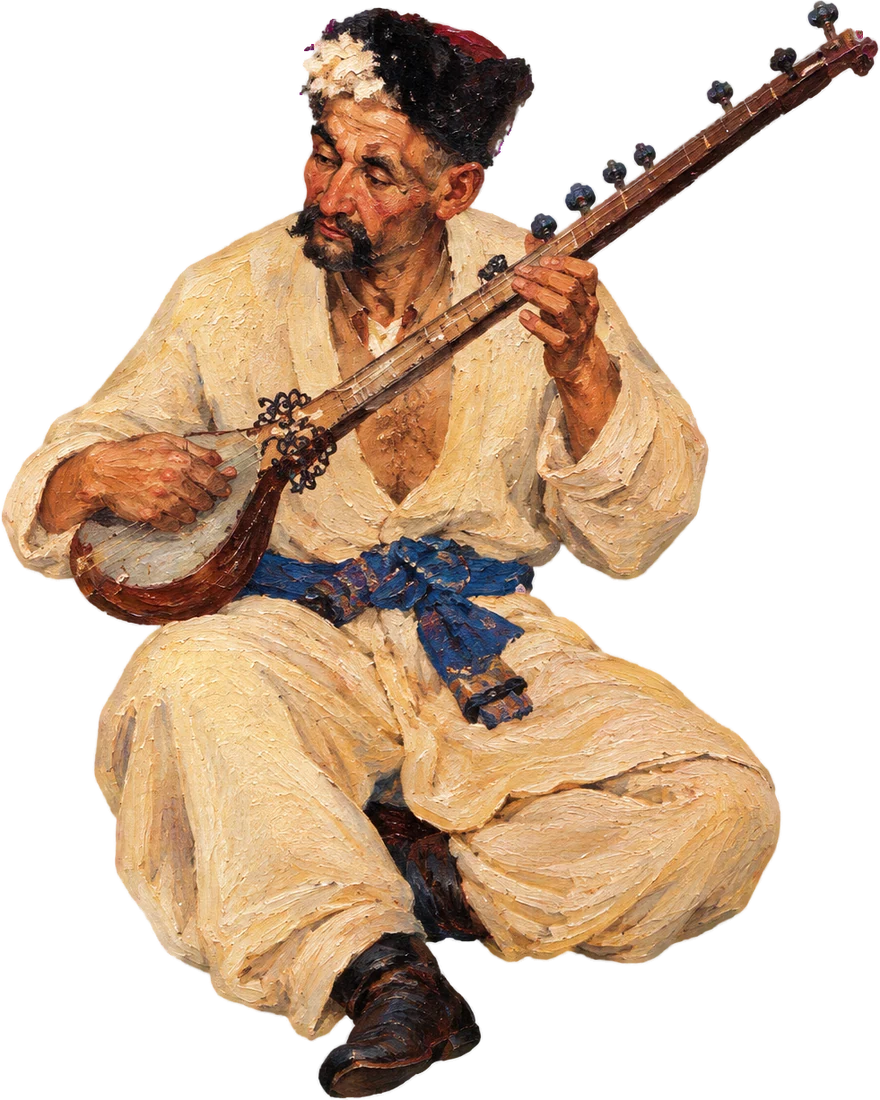
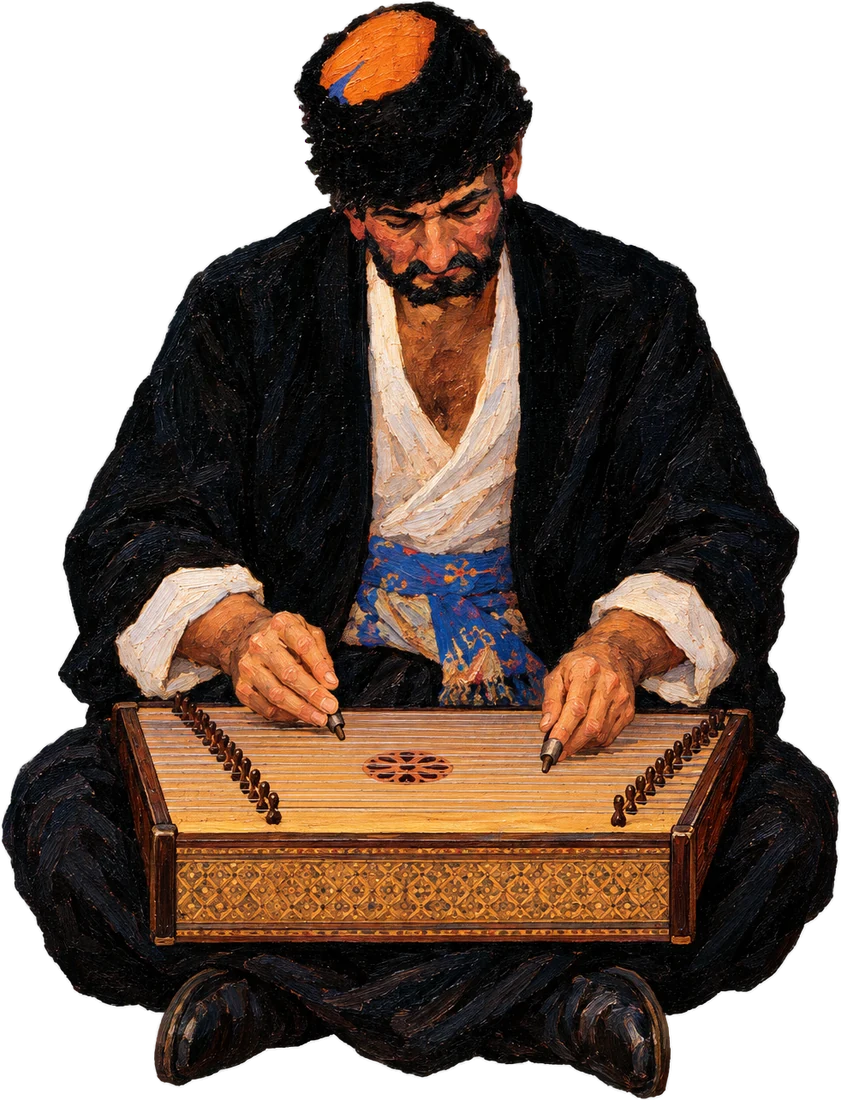
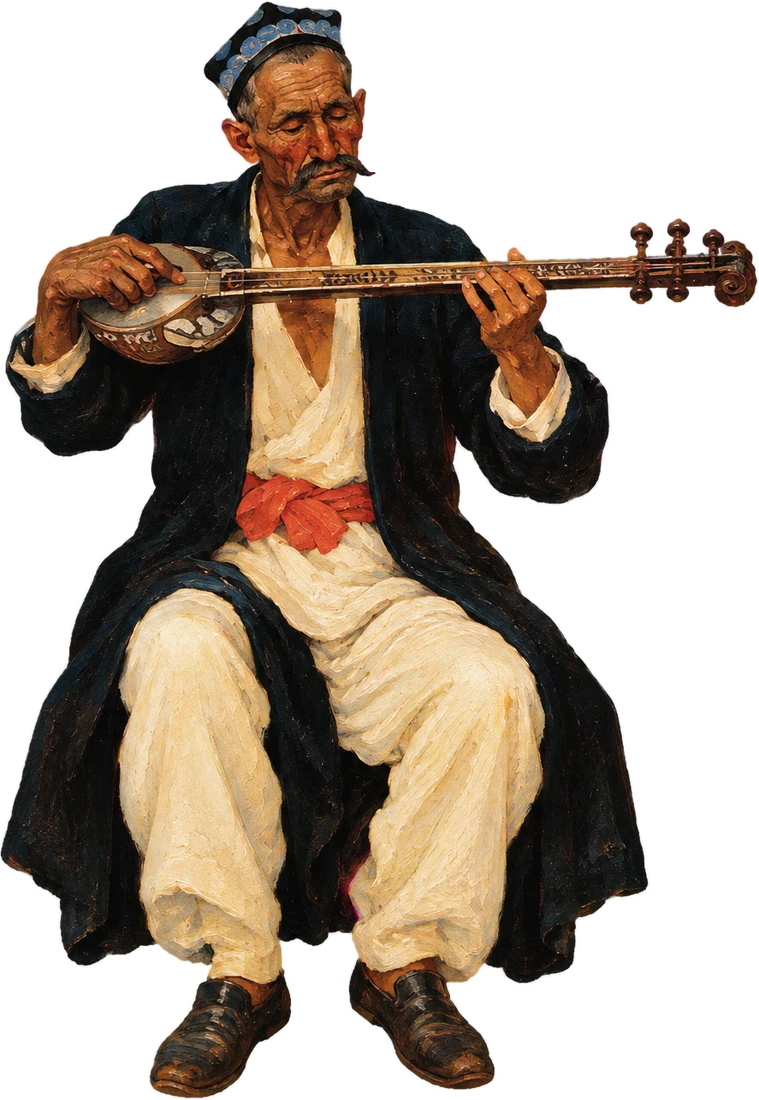
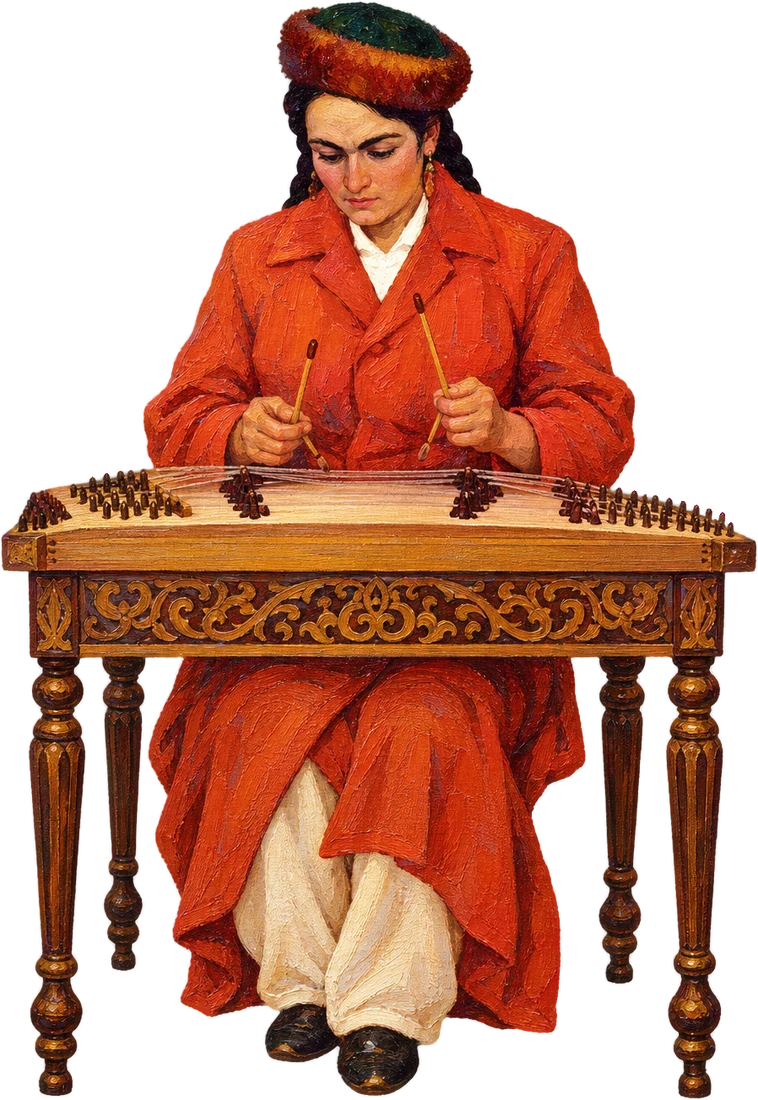
Meet the instruments that give Muqam its voice. Bowed melodies, ringing strings and a pulse that brings everyone together.
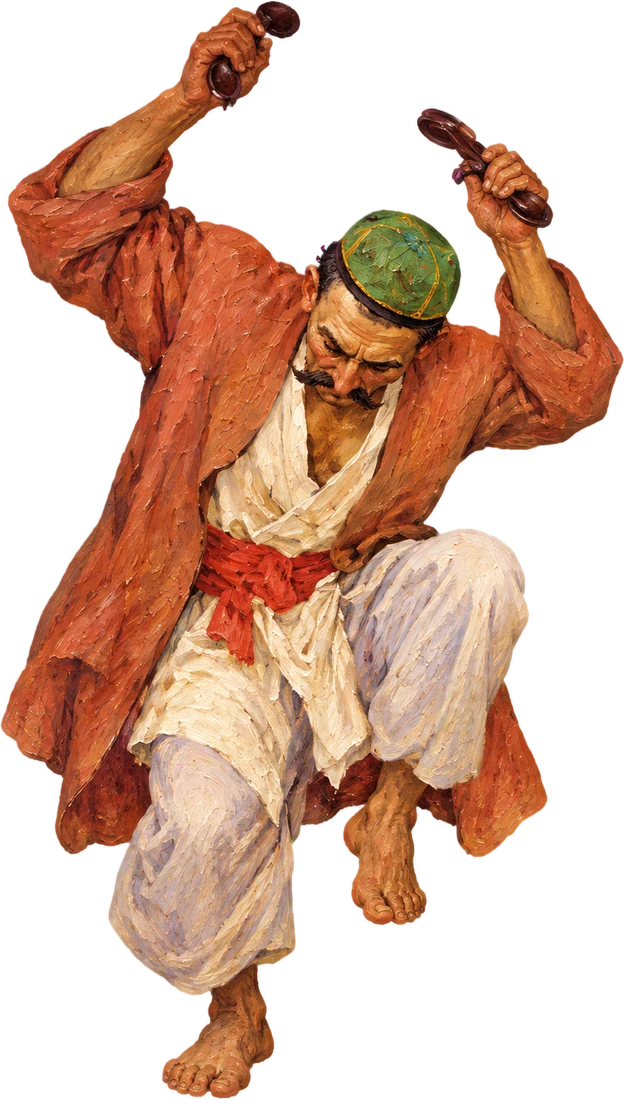
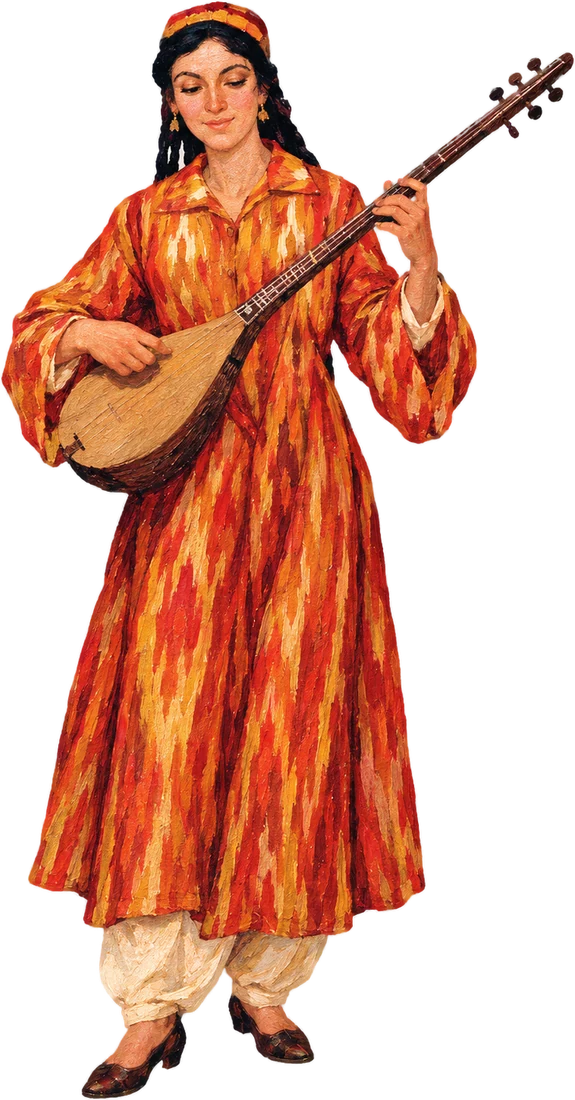
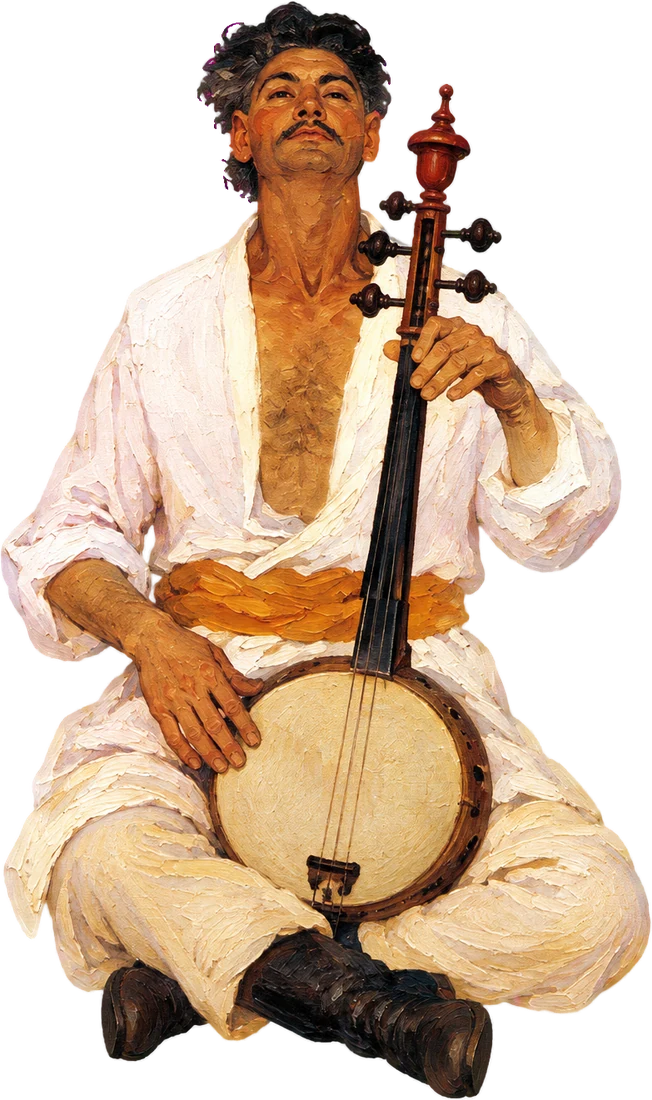
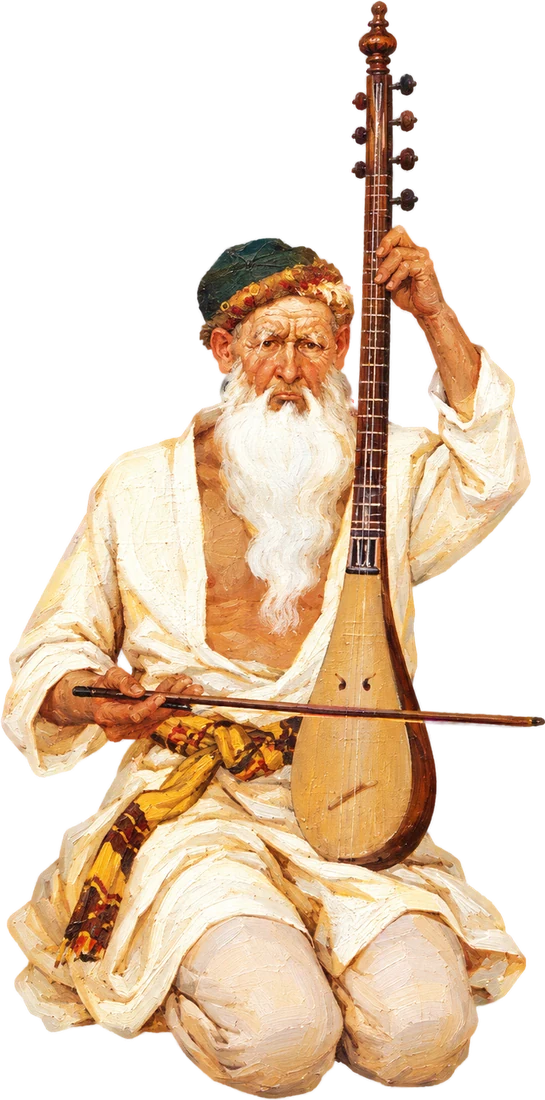
The instrument names are interpretations of the painting. Discover their distinctive forms and voices.
More than a performance, Muqam is a meeting of music, poetry and dance. A living memory, passed from one voice to the next.
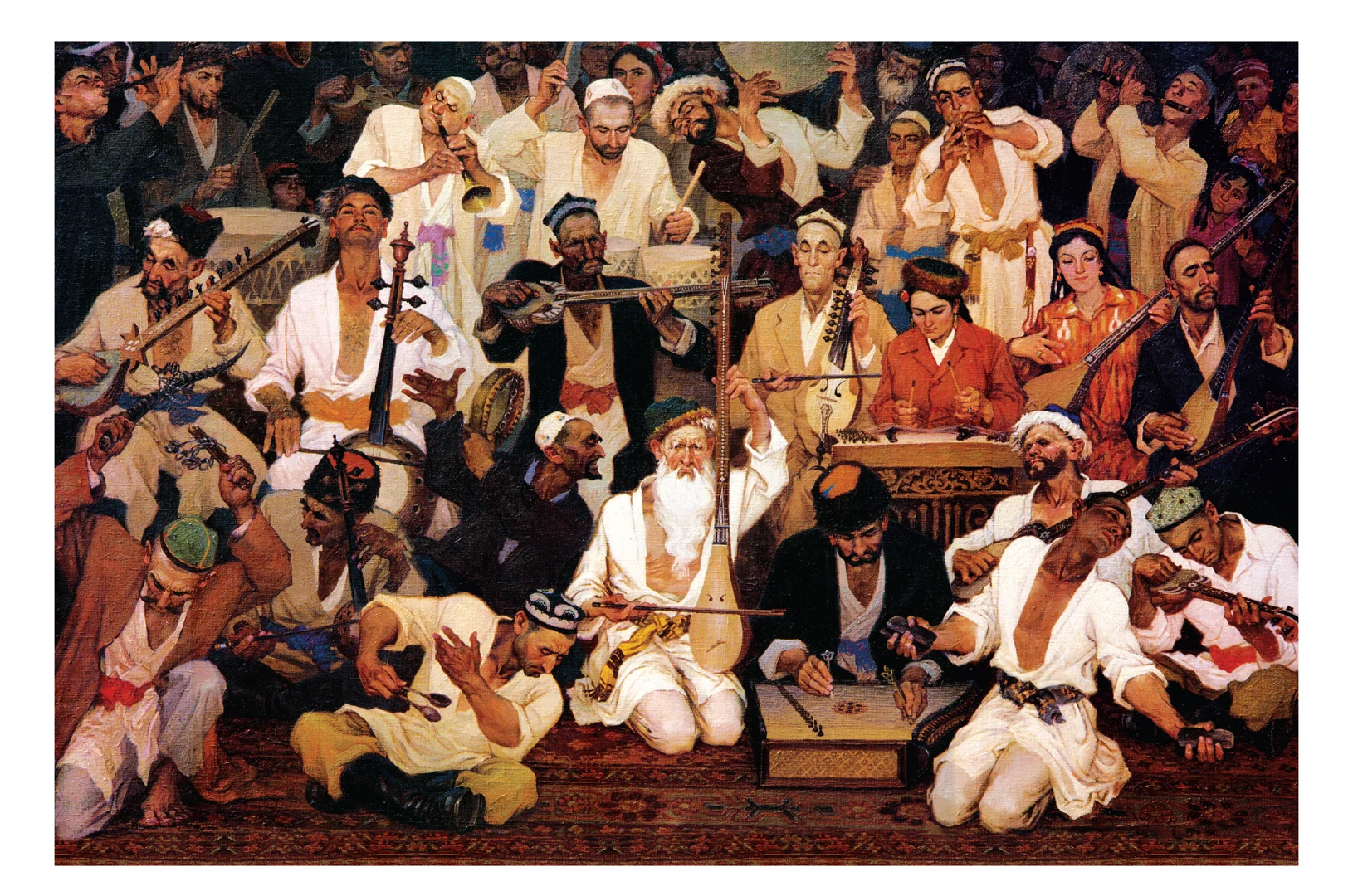
Muqam brings together song, instrumental music, poetry, and dance in Uyghur cultural life. Its repertoire draws on folk storytelling and classical verse, performed by solo voices and ensembles. The Twelve Muqam is one of several regional traditions, alongside Dolan, Turpan, and Hami Muqam. It unfolds across twelve extended suites, each joining different musical forms. UNESCO recognizes Uyghur Muqam of Xinjiang as intangible cultural heritage. This page offers an introduction through the musicians and instruments in the painting.
Read about the tradition · UNESCOVoices and instruments, in many colours.
Classical verse and stories carried in song.
Rhythm takes shape in movement.
A Twelve Muqam suite is commonly described in three broad sections: Chong Naghma, Dastan, and Meshrep. An opening in free rhythm leads into measured songs and instrumental passages, followed by narrative songs and dance songs.
The tradition is named for its twelve suites, yet the names themselves are rarely listed. They come from Arabic and Persian rather than Turkic roots, and several are shared with maqam traditions far to the west.
Select a suite to bring it forward.
Transliterations vary between sources. These follow the spelling conventions used elsewhere on this page.
Thirty-three figures. One extraordinary ensemble. Discover every retained character from the painting, from the front-row musicians to the voices behind them.